- 0 ft
- 20 ft
- 40 ft
- 60 ft
- 80 ft
- 100 ft
The reef
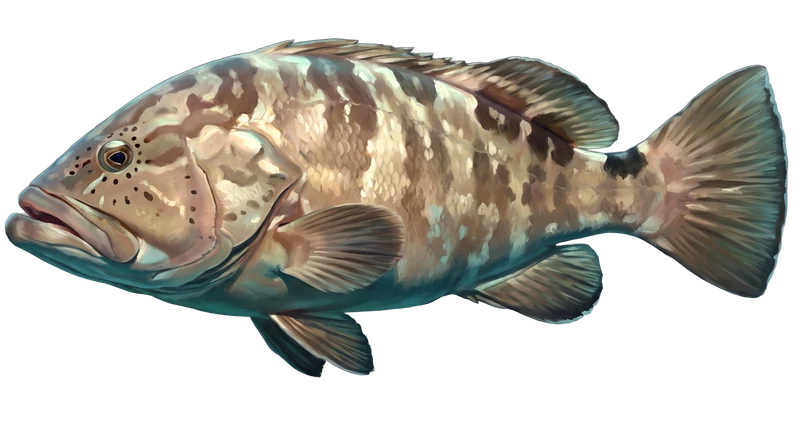
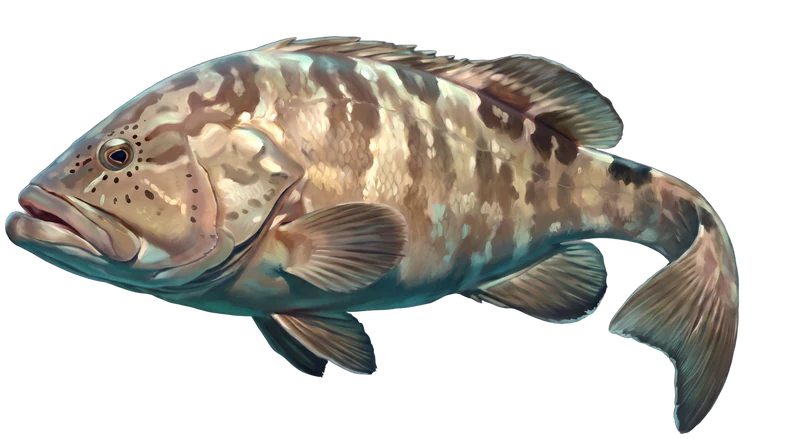
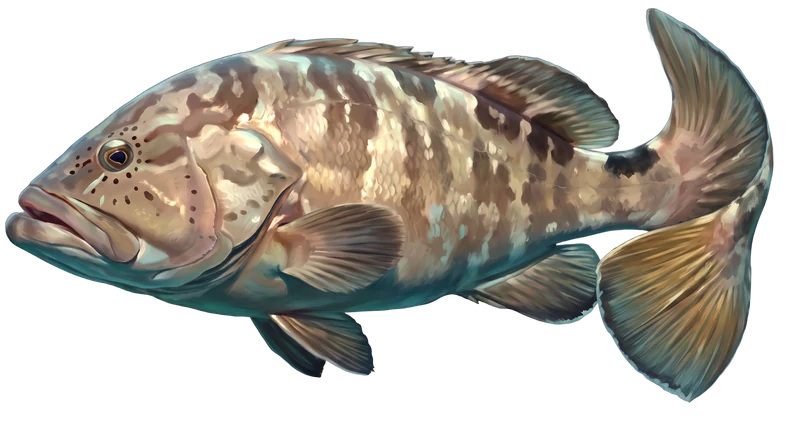
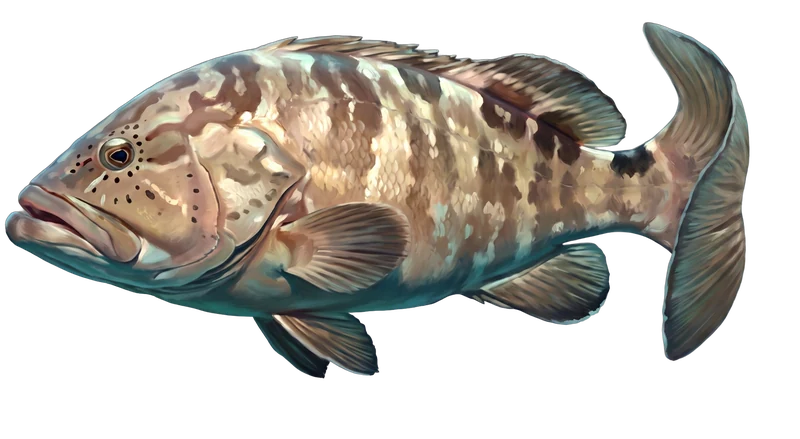
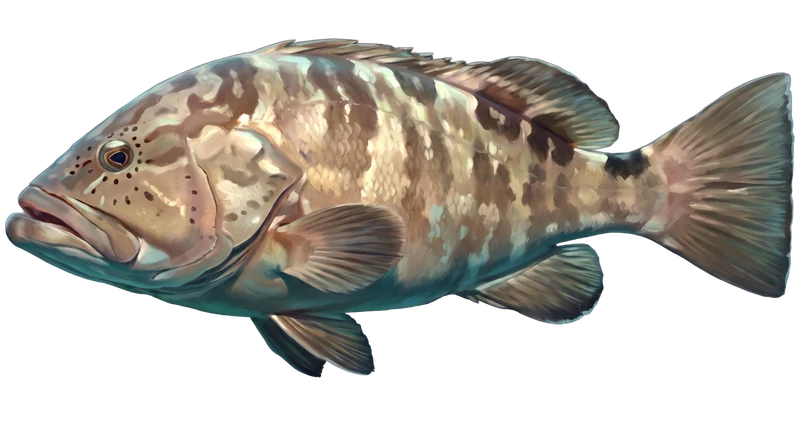
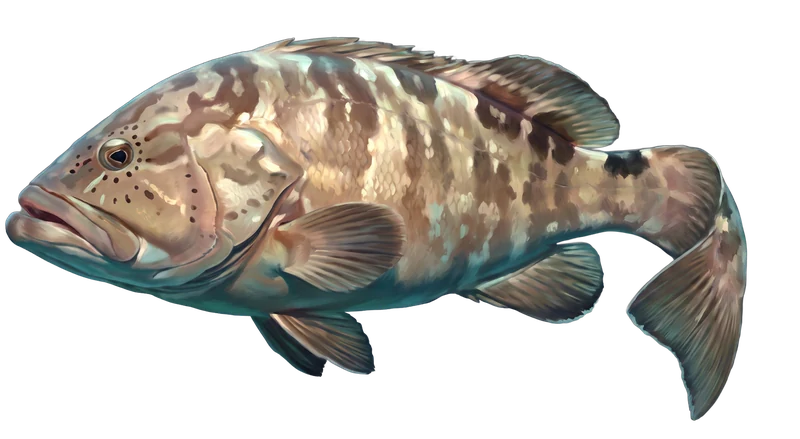
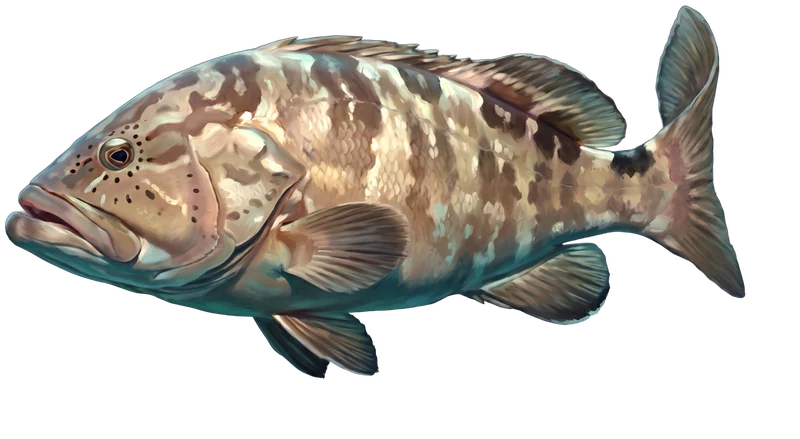
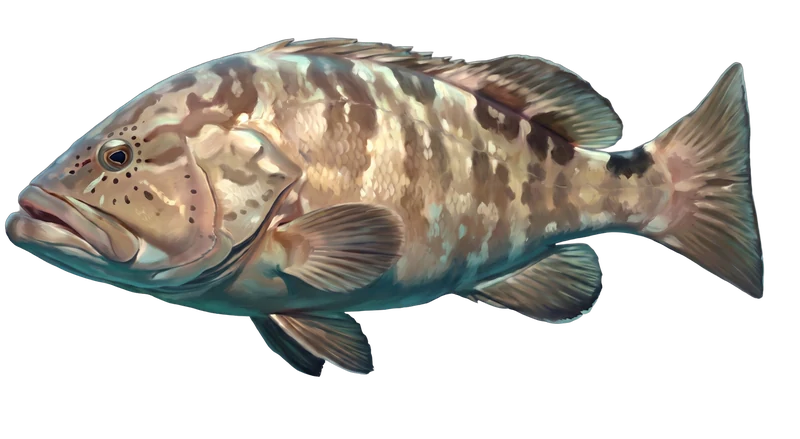
Grouper
Epinephelus striatus
Depth0–100 ft
Grouper hold on Bimini's reef and around the wrecks, and the island holds the IGFA all-tackle Nassau grouper world record (38 lb 8 oz, 1994). Nassau grouper is Critically Endangered and closed to all take in the Bahamas from 1 December to 28 February.
- Typical10–20 lb12–24 in
- Largest recorded55 lb4 ft
- Depth range0–426 ftspecies-wide
- IGFA all-tackle38 lb 8 ozBimini, Bahamas · 1994
How big, really
A grouper and a six-foot adult, drawn to one scale.

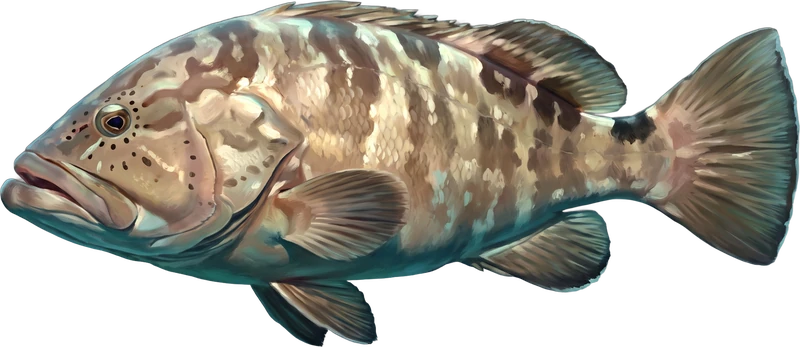
Grouper · Typical size · 12–24 in — drawn at 2 ftvsAdult · 6 ft
Grouper · Largest recorded · 4 ft (48 in)vsAdult · 6 ft
The grouper year
Twelve months around the dial, straight from the island's season data — peak months reach the outer ring. Pick a month to see what else is running. Peak: Jun, Jul, Aug.
PeakJun–Aug
January — Grouper is off season
Also running this month
- BonefishPeak
- WahooPeak
- PermitGood
- Yellowtail SnapperGood
February — Grouper is off season
Also running this month
- BonefishPeak
- WahooPeak
- PermitGood
- Yellowtail SnapperGood
March — Grouper is off season
Also running this month
- BonefishPeak
- PermitPeak
- Blue MarlinGood
- Mahi (Dolphin)Good
- SailfishGood
- WahooGood
- Yellowtail SnapperGood
April — Grouper is off season
Also running this month
- Blue MarlinPeak
- BonefishPeak
- Mahi (Dolphin)Peak
- PermitPeak
- SailfishPeak
- Yellowtail SnapperGood
May — Grouper is off season
Also running this month
- Blue MarlinPeak
- Bluefin TunaPeak
- BonefishPeak
- Mahi (Dolphin)Peak
- PermitPeak
- SailfishPeak
- TarponGood
- Yellowtail SnapperGood
June — Grouper is peak
Also running this month
- Blue MarlinPeak
- BonefishPeak
- Mahi (Dolphin)Peak
- PermitPeak
- TarponPeak
- Yellowtail SnapperPeak
- Bluefin TunaGood
- SailfishGood
July — Grouper is peak
Also running this month
- Blue MarlinPeak
- BonefishPeak
- PermitPeak
- TarponPeak
- Yellowtail SnapperPeak
- Mahi (Dolphin)Good
August — Grouper is peak
Also running this month
- BonefishPeak
- PermitPeak
- TarponPeak
- Yellowtail SnapperPeak
September — Grouper is off season
Also running this month
- BonefishPeak
- PermitGood
- TarponGood
- Yellowtail SnapperGood
November — Grouper is off season
Also running this month
- BonefishPeak
- WahooPeak
- PermitGood
- Yellowtail SnapperGood
December — Grouper is off season
Also running this month
- BonefishPeak
- WahooPeak
- PermitGood
- Yellowtail SnapperGood
Field notes
- How it is fished
- Bottom fishing with live bait (pinfish, threadfin herring, grunts, squid) on fish-finder or knocker rigs near reefs, wrecks, and ledges, using heavy tackle and circle hooks with an aggressive initial hookset to pull the fish away from structure before it can dive back into a hole.
- What it eats
- Carnivorous ambush predator. FishBase: mainly fish (about 54% of diet) and crabs (about 23%), with lesser amounts of other crustaceans and mollusks. Florida Museum lists specific prey including parrotfish, wrasses, damselfish, squirrelfish, snappers, and grunts, engulfed whole via rapid suction feeding.
- Depth
- FishBase: shoreline to at least 295 ft; spawning aggregations form at 65-130 ft. NOAA: found to depths of about 426 ft, generally 20-200 ft.
- Worth knowing
- Nassau grouper's sex-change biology is genuinely unsettled science, not a simple textbook fact: it was long assumed to be a protogynous hermaphrodite (changing from female to male, reportedly between about 12-31 in), the view still cited by Florida Museum. More recent research cited on FishBase indicates the species may actually be dioecious (separate sexes maintained throughout life, with documented 'primary males'), overturning the older assumption — both claims are reported here because sources disagree. Separately well established: Nassau grouper forms massive, site-faithful winter spawning aggregations tied to specific lunar cycles, the exact behavior that made the species so vulnerable to overfishing.
- Conservation & rules
- IUCN Red List: Critically Endangered, uplisted from Endangered in 2018 (Sadovy, Aguilar-Perera & Sosa-Cordero, 2018, IUCN Red List 2018: e.T7862A46909843), with a population decline of about 60% over three generations (27-30 years). U.S. ESA status: Threatened, with harvest fully prohibited in U.S. federal waters. Bahamas closed season: December 1 through February 28 inclusive, annually, under the Fisheries Protection Ordinance/Regulations — no take, landing, processing, or sale during this period without Director of Fisheries research approval, and any grouper landed outside the closure must have head, tail, and skin intact for species verification. Countrywide closures began in 2004, following site-specific closures (Andros, Long Island) starting in 1998. Outside the Nassau grouper closure, a general Bahamas grouper regulation of a 3 lb minimum weight and a vessel bag limit of 60 lb or 20 demersal fish (snapper and grouper combined), whichever is less, is reported by secondary sources but not independently confirmed against an official Bahamas government document.
- Taxonomy
- Nassau grouper
The record
38 lb 8 ozIGFA all-tackle world record
Angler Lewis Goodman · Bimini, Bahamas · 1994
Where it lives
The island's relief model with the reef lit — 10–60 ft, patch coral and hard bottom. Drag it to change the angle.








The Bimini story
The IGFA All-Tackle World Record Nassau grouper — 38 lb 8 oz, caught February 14, 1994 — was landed at Bimini, Bahamas by angler Lewis Goodman, making Bimini the site of the species' standing world record. Grouper hold on Bimini's reef and around wrecks including the SS Sapona.
Sources
What we could not verify (3)
- Whether Nassau grouper is protogynous or dioecious — sources disagree; presented as evolving science.
- General Bahamas grouper bag limit and minimum weight — secondary aggregator sources, not an official government PDF.
- Primary IUCN Red List PDF returned a 403 error on direct fetch; status corroborated via multiple independent secondary reports (WCS, Ambergris Today).