- 0 ft
- 500 ft
- 1,000 ft
- 1,500 ft
- 2,000 ft +
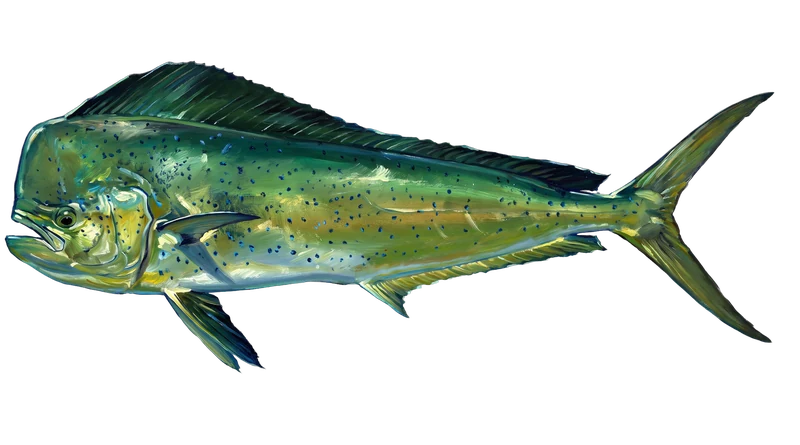
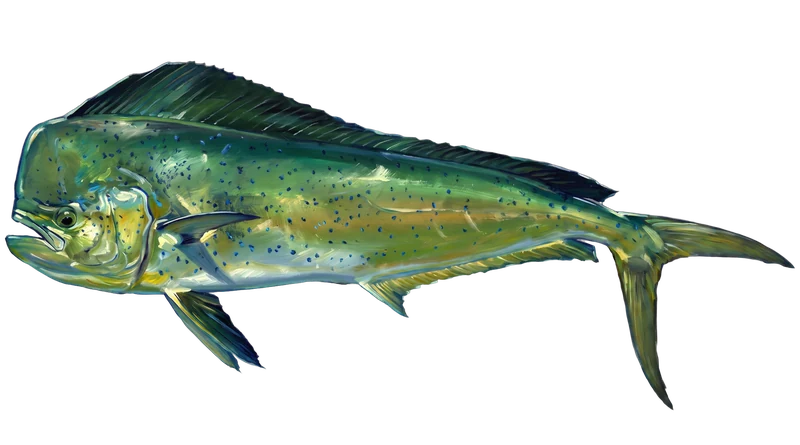
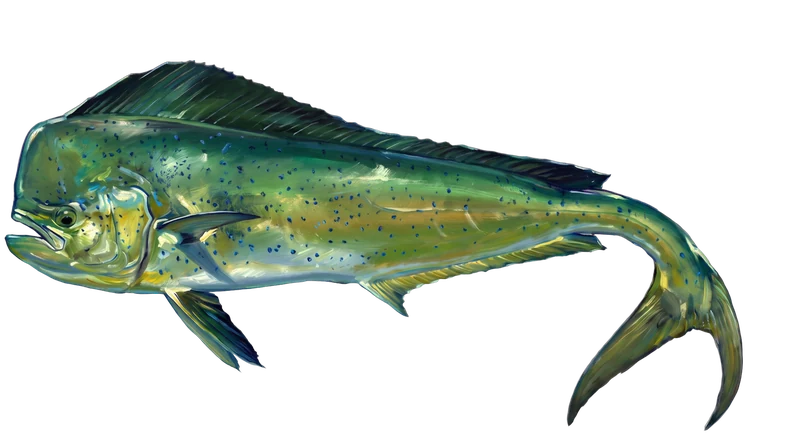
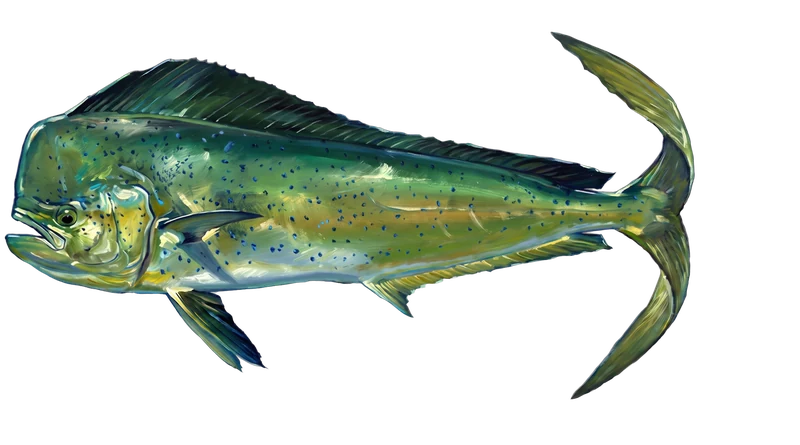
Bluewater
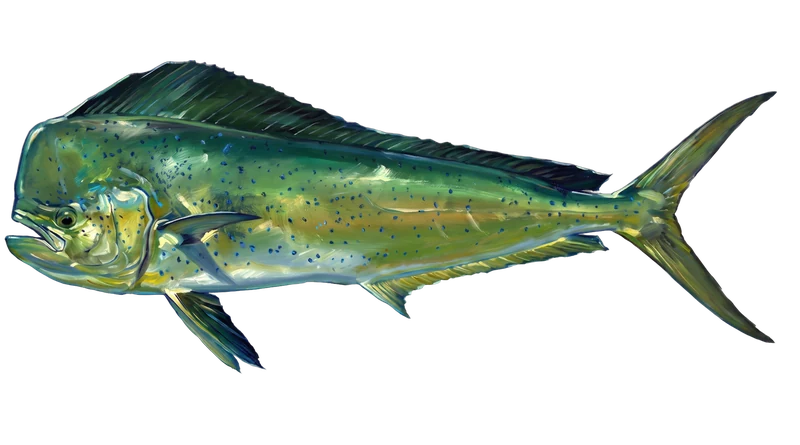
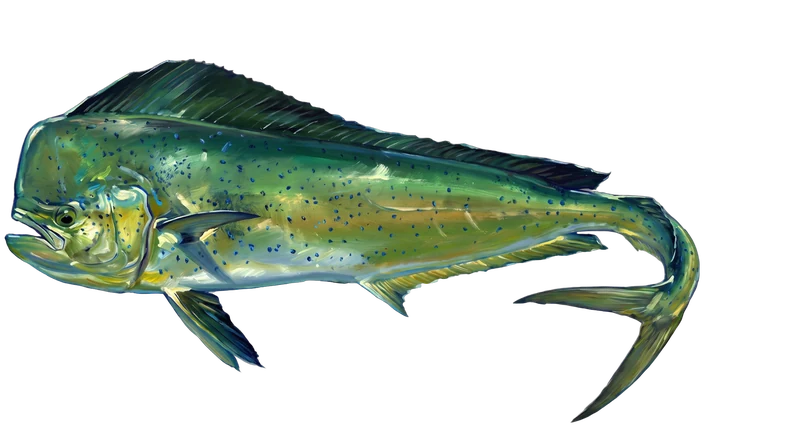
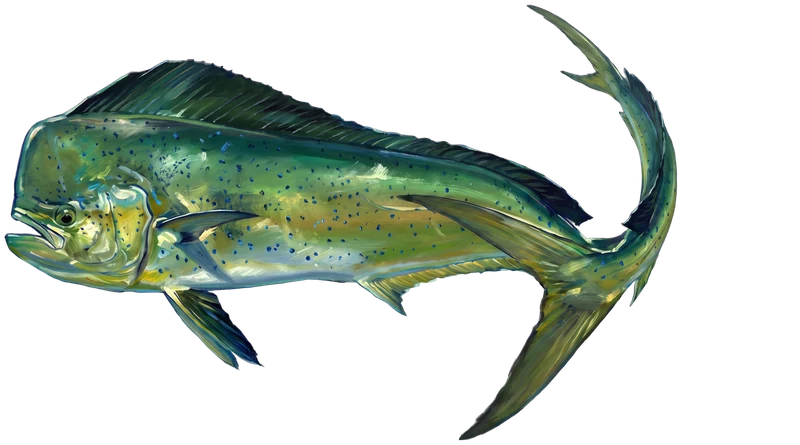
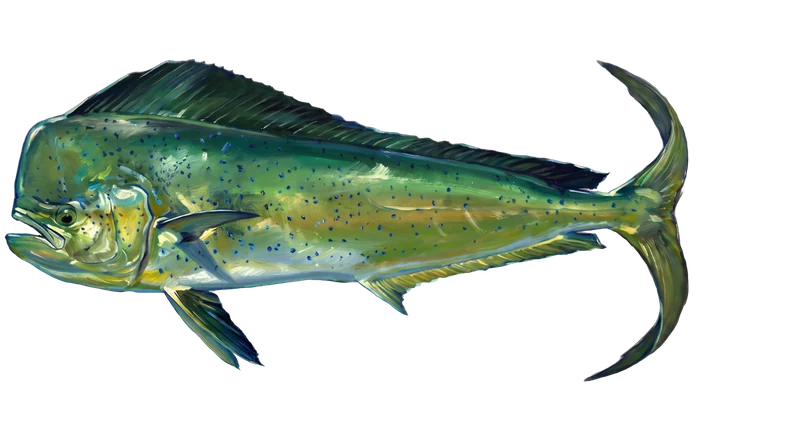
Mahi (Dolphin)
Coryphaena hippurus
Depth0–2,000 ft +
Spring into summer along the same bluewater edge, often under weed lines a mile off the beach.
- Typical15–30 lb24–42 in
- Largest recorded87 lb6 ft
- Depth range0–279 ftspecies-wide
- IGFA all-tackle87 lbPapagayo, Costa Rica (Gulf of Papagayo) · 1976
How big, really
A mahi (dolphin) and a six-foot adult, drawn to one scale.

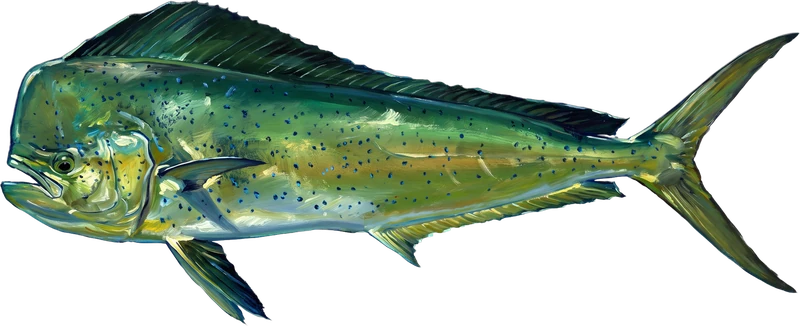
Mahi (Dolphin) · Typical size · 24–42 in — drawn at 3 ft 6 invsAdult · 6 ft
Mahi (Dolphin) · Largest recorded · 6 ft (72 in)vsAdult · 6 ft
The mahi (dolphin) year
Twelve months around the dial, straight from the island's season data — peak months reach the outer ring. Pick a month to see what else is running. Peak: Apr, May, Jun.
PeakApr–Jun
January — Mahi (Dolphin) is off season
Also running this month
- BonefishPeak
- WahooPeak
- PermitGood
- Yellowtail SnapperGood
February — Mahi (Dolphin) is off season
Also running this month
- BonefishPeak
- WahooPeak
- PermitGood
- Yellowtail SnapperGood
March — Mahi (Dolphin) is good
Also running this month
- BonefishPeak
- PermitPeak
- Blue MarlinGood
- SailfishGood
- WahooGood
- Yellowtail SnapperGood
April — Mahi (Dolphin) is peak
Also running this month
- Blue MarlinPeak
- BonefishPeak
- PermitPeak
- SailfishPeak
- Yellowtail SnapperGood
May — Mahi (Dolphin) is peak
Also running this month
- Blue MarlinPeak
- Bluefin TunaPeak
- BonefishPeak
- PermitPeak
- SailfishPeak
- TarponGood
- Yellowtail SnapperGood
June — Mahi (Dolphin) is peak
Also running this month
- Blue MarlinPeak
- BonefishPeak
- GrouperPeak
- PermitPeak
- TarponPeak
- Yellowtail SnapperPeak
- Bluefin TunaGood
- SailfishGood
July — Mahi (Dolphin) is good
Also running this month
- Blue MarlinPeak
- BonefishPeak
- GrouperPeak
- PermitPeak
- TarponPeak
- Yellowtail SnapperPeak
August — Mahi (Dolphin) is off season
Also running this month
- BonefishPeak
- GrouperPeak
- PermitPeak
- TarponPeak
- Yellowtail SnapperPeak
September — Mahi (Dolphin) is off season
Also running this month
- BonefishPeak
- PermitGood
- TarponGood
- Yellowtail SnapperGood
October — Mahi (Dolphin) is off season
Also running this month
- BonefishPeak
- PermitGood
- Yellowtail SnapperGood
November — Mahi (Dolphin) is off season
Also running this month
- BonefishPeak
- WahooPeak
- PermitGood
- Yellowtail SnapperGood
December — Mahi (Dolphin) is off season
Also running this month
- BonefishPeak
- WahooPeak
- PermitGood
- Yellowtail SnapperGood
Field notes
- How it is fished
- Trolling natural bait or lures along weedlines, sargassum mats, and floating debris; once fish are located, anglers often switch to sight-casting to the visible school around the structure.
- What it eats
- Small oceanic fishes — flying fish make up roughly 25% of the diet by weight — plus man-o-war fish, sargassum fish, triggerfish, and pelagic larvae of other fish and invertebrates. Hunts by day, often in pairs or small packs.
- Worth knowing
- Mahi-mahi grow extremely fast, reaching sexual maturity in just 4-5 months, with a maximum lifespan of only about 4 years — one of the fastest growth rates of any large gamefish, which also lets the species tolerate heavy fishing pressure unusually well.
- Conservation & rules
- IUCN Red List: Least Concern (2010 assessment, current as of the 2025.1 Red List update) — high resilience due to rapid growth and very high fecundity. Not currently listed as overfished by NOAA/ICCAT-adjacent assessments.
The record
87 lbIGFA all-tackle world record
Angler Manuel Salazar · Papagayo, Costa Rica (Gulf of Papagayo) · 1976 · 5 ft 10 in long
Where it lives
The island's relief model with bluewater lit — 2,000 ft +, the Gulf Stream edge, a mile off the beach. Drag it to change the angle.








The Bimini story
Mahi run Bimini's bluewater edge in spring into summer, often found under weedlines a mile or so off the beach, per longstanding local fishing reputation. No specific IGFA record or documented Bimini mahi tournament milestone could be verified.
Sources
What we could not verify (2)
- Exact IGFA record could not be re-confirmed directly on igfa.org's live database; relied on consistent secondary reporting across multiple sources.
- Any Bimini-specific mahi record or tournament connection.